What I learned from a Boat Builder
It was mid-July, halfway through our first summer with a school-ager. We hadn’t found our rhythm—no steady pool days, no string of playdates, not even a family vacation—but we were making it through. I often reminded myself, This is the life I dreamed about ten years ago. That mantra helped me soften into the realities of the present: the Mom-guilt over too much or too little screen time, the effort to be loving every second, plus other adult stuff—financial stressors and everything breaking down in an older house.
One afternoon, I was happily lost in grown-up work—editing photos, writing blog posts, reviewing brand contracts—when my son, deep in a Lego creation, asked, “Mom, why are the bottoms of boats red?” He’s been deep in a Titanic phase this summer and, as it turns out, a lot of kids his age are—which means all of us modern parents are secretly re-living the traumatic visions from James Cameron’s POV of the Titanic (we probably all need a hug, on dry land). Either way, I didn’t have the answer. “I don’t know…why do you think they are?” I replied, half-distracted. We moved on.
Fast forward to this past weekend, visiting family in Beaufort, North Carolina. I was in another flavor of motherhood—one sick child, another recovering from an ER trip the previous week (the stress of not getting his head injury wet during a short beach visit), and the ultimate parent realization that this was a trip, not a vacation—plus the ongoing job of managing emotions (read: meltdowns).
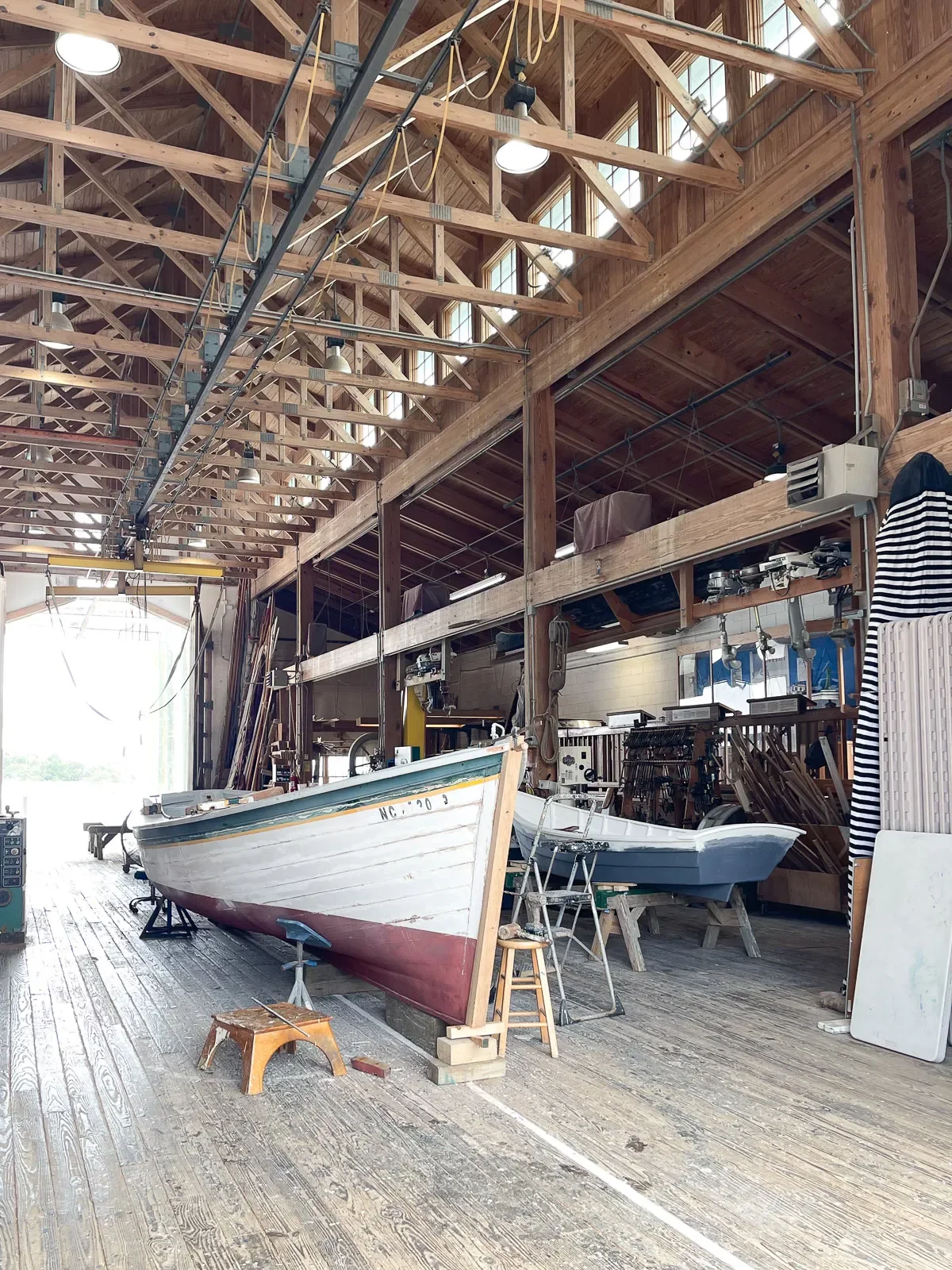
Still, we made time for our tradition: walking downtown and having lunch at our favorite spot along the water. This time, we wandered into Beaufort’s Watercraft Center —part workshop, part museum, and full of charming waterside vibes. From the side entrance, you can look down into the shop: boats mid-restoration, neat rows of tools, artifacts from the past, and the enchanting (IMO) smell of woodworking.
My kids skipped to the railing and started chatting with an older gentleman below. He reminded me of a warmer Michael Caine, with a gentle Southern accent. He set down his tools and gave them his full attention, answering every rapid-fire question from my 4- and 6-year-old. Then came one I had forgotten: “Why do boats have red on the bottom?”
“That’s a great question,” he said.
“Lots of creatures—barnacles, clams—like to attach to boat bottoms, which can damage them. Red paint has copper, which they don’t like. It keeps the boat safe.”
We had our answer.
My son said “oh” and moved on, funny enough. However, I lingered, watching him finally get an answer weeks in the making, and feeling total joy in that moment.
Two things struck me.
First, this man’s patience. He spoke with genuine respect—not the over-the-top tone of Blippi, but as an educated adult—to my very excited, eager-to-talk children. I should also mention the captive audience of other tourists and how patient they were listening through this kid-led conversation with the gentleman. No one had a phone in their hand, and no one was rushing through the moment. It was beautiful.
Second, my son found his answer without Alexa, Google, or AI. It came from a real person, face-to-face. When was the last time you didn’t Google something the second you struggled to find the answer? This is the summer my son is boat-obsessed, and he’s clearly eager to learn. Yet, even he didn’t walk over to Alexa and ask the question. He found the answer—eventually. In real life, from a very patient person. It was wholesome. It was inspiring. And I want more of that.
I often picture “slow living” as a Pinterest-perfect scene—branded clothes, makeup, a book on a picnic blanket—but in reality, that’s a highly curated and artistic scene. Slow living is moments like this: stepping away from work to be fully present in a spontaneous moment. Sometimes it’s simply giving our full attention to those in front of us. It’s letting questions linger, trusting the right answer might not come right away but at the correct moment. It’s choosing presence over productivity in unexpected moments. And maybe, just maybe, that’s when life feels richest.
Love,
Hannah